Blog
WhatsApp COD Confirmation Flow That Cuts RTO
A practical WhatsApp COD confirmation flow for 2026 ecommerce teams that want fewer fake orders, faster dispatch decisions, and lower RTO.
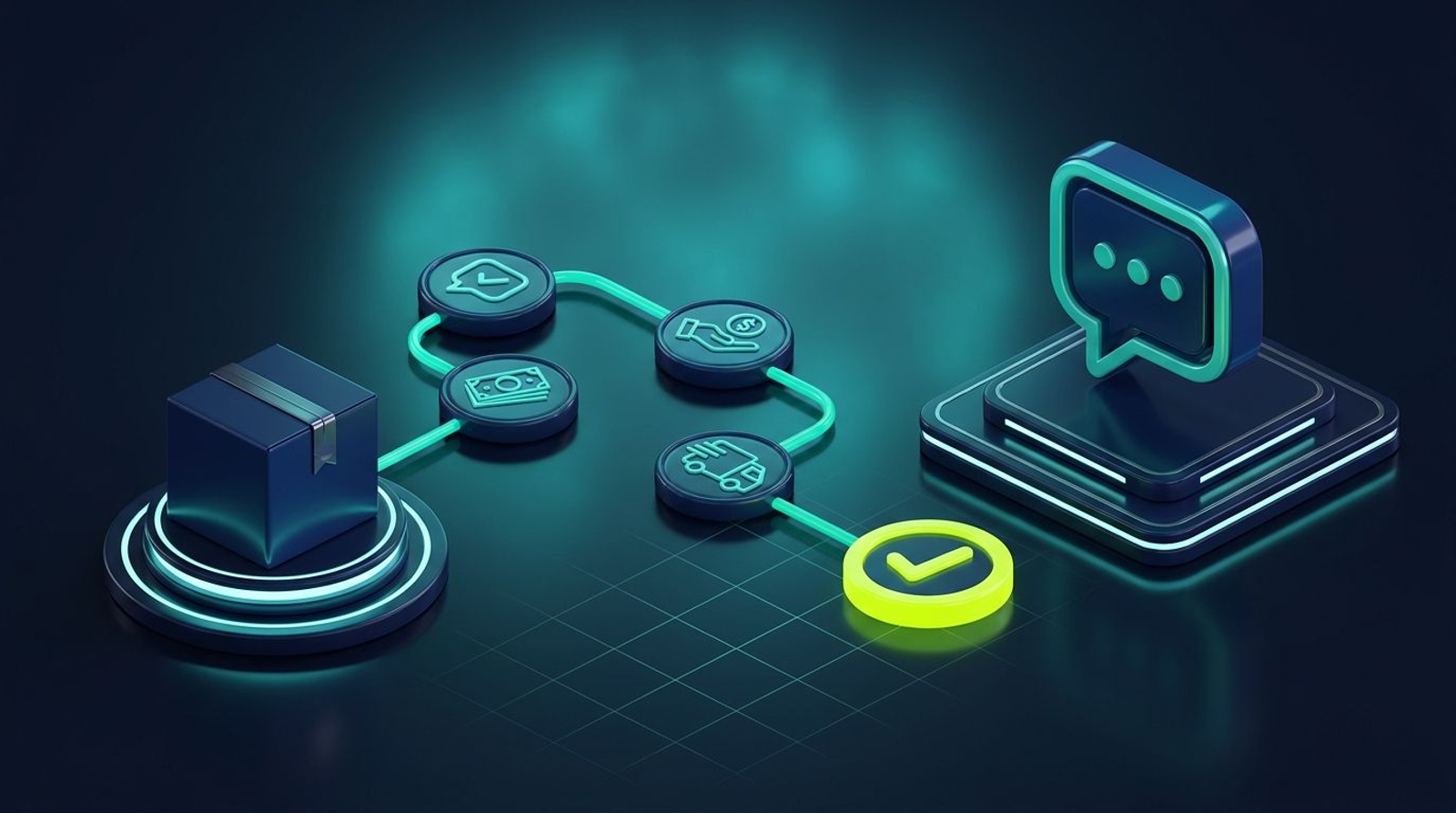
WhatsApp COD Confirmation Flow That Cuts RTO. Written by Adeem Adil Khatri at Zaps Studio.
TL;DR
- Fixed-price automations that pay for themselves in weeks, not quarters.
- Lead routing, quote follow-ups, and recovery flows with real ROI numbers.
- You own the system — no retainer lock-in to keep it running.
A good WhatsApp COD confirmation flow verifies intent right after checkout, pauses fulfillment until the buyer confirms, and follows up once or twice before manual review. In 2026, this is one of the simplest ways to reduce return-to-origin volume on COD-heavy stores, especially when confirmation goes out within minutes and uses a low-friction YES/CANCEL reply.
Why does this flow reduce RTO?
The flow works because it catches fake, impulsive, and low-intent COD orders before they leave the warehouse. Industry guidance for 2026 points to instant WhatsApp confirmation as a major RTO lever, with one source describing a typical 15–25% RTO reduction when automated confirmation replaces manual calls. Another pricing guide notes that utility messages are the correct transactional category for order confirmation and can be free inside an active 24-hour service window.
What does the best WhatsApp COD confirmation flow look like?
The strongest setup is straightforward: order placed, WhatsApp confirmation sent in minutes, reply captured, shipment paused until confirmed, then escalation if the customer stays silent. That pattern is consistent across 2026 RTO guidance and logistics-focused workflows that pair confirmation with pre-delivery reminders.
- Trigger the flow as soon as a COD order is created.
- Send a utility message with the order total, delivery city, and a single action: YES or CANCEL.
- If the customer confirms, release the order to the warehouse or courier queue.
- If the customer does not respond, send one reminder after a short delay.
- If there is still no reply, hold the order for manual review or cancel it after a clear timeout.
- Add a second touchpoint before delivery for cash-readiness or address checks on higher-risk orders.
That structure is simple enough to automate in n8n and still flexible enough for different order values, pin codes, and risk scores.
Which numbers matter most?
A practical article should focus on three numbers: confirmation speed, response rate, and shipment-hold compliance. The best public guidance for 2026 says the first WhatsApp should go out within 1–5 minutes, because delays weaken the effect fast. Pricing also matters: utility and authentication messages are commonly priced around ₹0.115–₹0.145 per message in India, while marketing templates are much more expensive.
If you want the economics laid out cleanly, Zaps Studio’s workflow automation pricing guide shows how message fees, platform fees, and implementation scope stack up in real projects. For teams comparing build options, our pricing page is the fastest way to see fixed-price packages.
When should you use one-time confirmation versus a second reminder?
Use one-time confirmation for low-risk, low-value COD orders where a fast YES/CANCEL reply is enough to separate real intent from noise. Add a second reminder when the cart value is higher, the pin code is high-risk, or the customer has a history of refusals.
For teams that want to push beyond one message, a pre-delivery WhatsApp reminder can ask the customer to keep cash ready or confirm availability. That extra step is often used alongside the initial confirmation, not instead of it.
Which tools are worth comparing?
For the WhatsApp layer, Wati is a solid choice if you want a shared inbox and WhatsApp BSP setup, but it still needs separate workflow logic for hold-and-release automation.Wati For India-heavy ecommerce, AiSensy is popular for WhatsApp commerce operations, but it is less useful if you want broader multi-step automation outside messaging.AiSensy Respond.io is stronger for omnichannel inbox management, but it is not a full replacement for a custom order-control workflow.Respond.io
If you already run sales or ops in a CRM, HubSpot can handle routing and lifecycle steps, but COD confirmation logic usually needs extra workflow design to enforce shipment holds.HubSpot For teams that want more than a chat tool, Zaps Studio’s WhatsApp automation product overview explains how messaging can connect to ops rules, webhooks, and order-state changes.
What do most teams get wrong?
The biggest mistake is sending the confirmation too late. If the message lands hours after the order, the buyer’s intent may already have shifted and the RTO benefit drops. Another common mistake is shipping before confirmation, which turns the whole flow into a notification rather than a control point.
A third mistake is using the wrong message category. Transactional order confirmation should not be handled like a promo blast, and Meta pricing treats utility messaging differently from marketing.
How can this fit into a larger ops system?
The best version is not a standalone WhatsApp script. It sits inside a wider order-quality system that can also validate addresses, flag risky pin codes, and route unconfirmed orders for manual review. That is the same systems-first approach Zaps Studio uses for lead routing automation and quote follow-up automation, except here the trigger is a COD order instead of a lead or quote.
If your store also needs post-purchase tracking, our Shopify WhatsApp order tracking workflow is the natural sibling build. For broader automation ideas, the Zaps Studio resources hub is where the supporting playbooks live.
Who should build this first?
This flow suits ecommerce teams that process enough COD volume for fake orders and RTO to hurt margins, but not so much volume that they can tolerate manual call-backs. It is especially useful for UK, US, and Canada-based operators selling into COD-heavy markets or working with distributed fulfillment teams.
Adeem builds these systems as fixed-scope automation projects, usually delivered in 2–4 weeks after audit, with clients owning the n8n source, credentials, and docs. For teams that need a custom build rather than a template, our ecommerce services page shows the kind of ops work this post is pointing toward.
If you want, I can also turn this into a tighter publish-ready version with stronger on-page SEO, stronger internal link density, and a more conversion-focused conclusion.
Keep reading
Workflow automation cost guide
USD/GBP bands for DIY, freelancer, and fixed-price builds.
OpenFixed-price packages
One workflow from $1,000. You keep the n8n source.
Open10 n8n workflow examples
Lead routing, CRM revival, quote follow-up, ecommerce ops.
Open5 B2B automation quick wins
The live how-to that pairs with most of these drafts.
Open
FAQ
Ready to automate your workflows?
Book a free 30-minute audit. We'll analyze your current workflows and identify automation opportunities that pay for themselves in weeks.