Blog
Returns Intake on WhatsApp Without a New Headcount
A practical WhatsApp returns-intake flow for ecommerce teams: identify the order, check eligibility, capture the outcome, and automate updates without confusing chat automation for returns management.
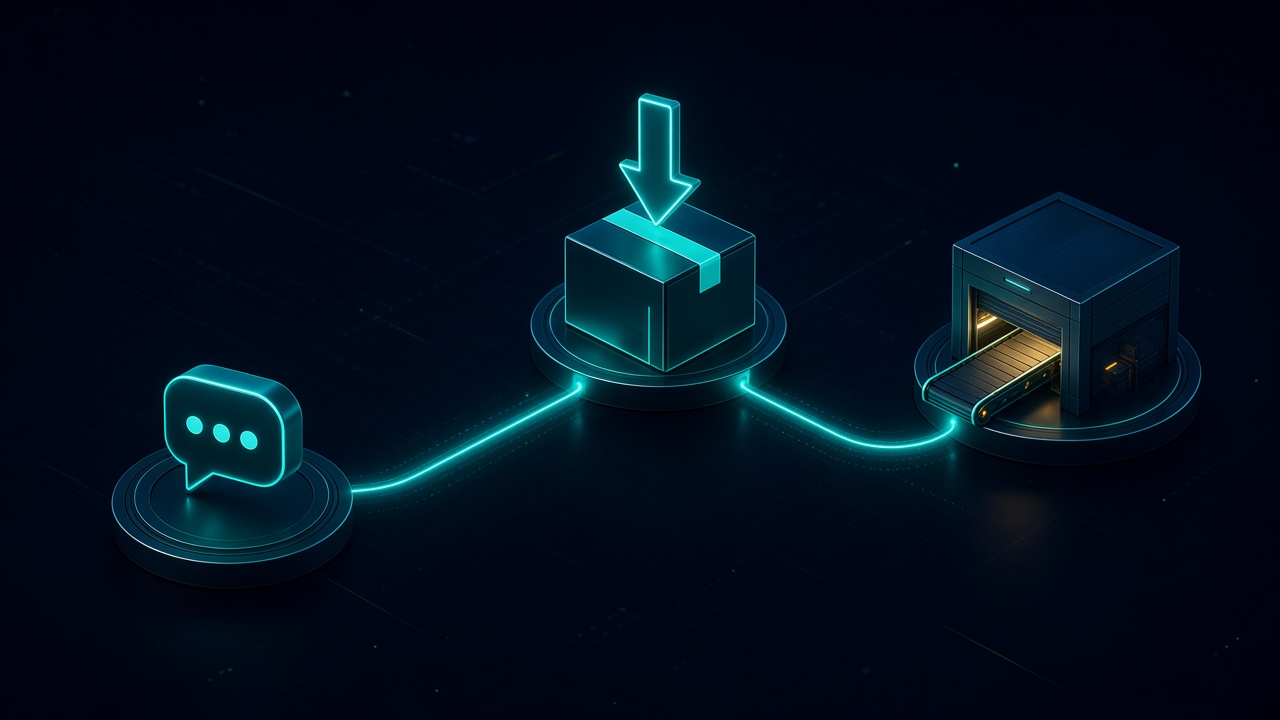
Returns Intake on WhatsApp Without a New Headcount. Written by Adeem Adil Khatri at Zaps Studio.
TL;DR
- Fixed-price automations that pay for themselves in weeks, not quarters.
- Lead routing, quote follow-ups, and recovery flows with real ROI numbers.
- You own the system — no retainer lock-in to keep it running.
A good ecommerce returns-intake flow on WhatsApp does more than ask for an order number. It identifies the order and item, checks policy eligibility, captures the reason and desired outcome, creates the next operational task, and keeps the customer updated. The aim is to automate routine returns without pretending that a chatbot replaces your returns system.
What should a WhatsApp returns intake flow do?
The flow should move from a conversational entry point into structured operational data:
-
Identify the order. Ask for the order number, phone number, or email, then confirm the matching order and let the customer select the specific item.
-
Capture the return details. Record the reason, product condition, photos where relevant, and preferred resolution: refund, exchange, or store credit.
-
Apply the policy. Check the return window, product category, payment method, condition requirements, and exception rules.
-
Create the resolution task. Generate a return label or pickup request, create an RMA or exchange order, and reserve inventory where possible.
-
Send status updates. Confirm receipt, explain the next step, notify the customer when the return is in transit or inspected, and confirm the refund or replacement.
That division matters because WhatsApp is the customer interface—not the entire returns-management system. The workflow still needs access to the ecommerce platform, inventory, payments, warehouse process, carrier services, and customer records.
At Zaps Studio, Adeem’s delivery approach is to make the chat flow the thin front end and put the business rules in n8n. That makes the automation easier to test, audit, and change when your returns policy changes.
How should the customer journey work?
A practical flow can look like this:
Customer: “I need to return something.”
WhatsApp flow: “I can help. Reply with your order number or use the phone number linked to your order.”
After the order is found, the flow should show the eligible items rather than making the customer describe the product from scratch:
Black hoodie, medium
White trainers, size 9
Stainless bottle, 750 ml
The customer then chooses the item, selects a reason, and answers only the condition questions relevant to that reason.
For example:
“It does not fit”
“Arrived damaged”
“Wrong item received”
“Changed my mind”
“Other”
The next question should depend on the answer. A damaged-item path may request photographs. A size issue may offer an exchange if inventory is available. A “changed my mind” request may be checked against the product category and policy window.
This structured approach is more dependable than giving an AI agent unlimited freedom. WhatsApp automation platforms commonly support automated replies, order-related workflows, routing, and integrations, but reliable approval still depends on deterministic data and policy rules.
Which return rules should be automated?
Automate rules that are clear, repeatable, and supported by reliable data:
Is the order genuine and paid?
Is the request within the return window?
Is the selected item eligible?
Is the item excluded because of hygiene, customisation, or final-sale status?
Is the product condition acceptable for the chosen resolution?
Is the requested exchange size or colour in stock?
Does the payment method require a different refund path?
Does the request contain fraud or manual-review signals?
The workflow should return one of three outcomes:
Approved: continue to label, pickup, exchange, or refund preparation.
Rejected with explanation: state the relevant policy reason and offer a human review path where appropriate.
Needs review: create a support or warehouse task with the conversation, order, item, evidence, and rule that triggered escalation.
Do not let a language model silently decide policy. Use the model, if needed, to classify free-text reasons or summarise evidence; use n8n and your source systems to enforce the actual rule.
What information should the workflow write back?
A returns intake flow is only useful if the data reaches the team that fulfils the return.
At minimum, write back:
Order ID and order number
Customer ID and verified contact details
SKU, variant, quantity, and price
Return reason and customer notes
Condition responses and photo references
Requested outcome
Eligibility result and rule applied
RMA or case ID
Label or pickup reference
Exchange inventory status
Current owner and escalation reason
Refund or replacement status
This is where a bespoke n8n workflow can outperform a generic WhatsApp bot. The same intake event can update Shopify, create a helpdesk case, notify a warehouse channel, reserve an exchange item, and add a record to your reporting layer.
For a broader view of practical automation patterns, see the five workflow automation quick wins for B2B teams. The principle is the same: remove repeated coordination work, but leave a clear human route for exceptions.
How should exceptions be handled?
The flow should make escalation visible rather than hiding uncertainty.
Escalate when:
The order cannot be matched confidently.
The request falls outside the policy window.
The item is marked delivered but the customer reports non-receipt.
The item is damaged, unsafe, or missing components.
The customer received the wrong product.
The customer requests an exchange with no suitable inventory.
A COD, split-payment, gift-card, or partial-refund rule applies.
A fraud or abuse signal is present.
The customer disputes a rejection.
The handoff should include the full context. “Customer wants a refund” is not enough. A useful handoff says which order was matched, which item was selected, which rule failed, what evidence was provided, and what outcome the customer requested.
That is also why automation-rate claims need caution. Routine intake and status notifications can be automated; approval and resolution rates depend on policy complexity, inventory accuracy, carrier coverage, and the quality of the underlying order data.
Which WhatsApp tools can handle returns intake?
Wati — A WhatsApp-first shared inbox and chatbot platform suited to teams that want standard support and commerce flows; pricing and message charges vary, and complex returns logic may still require external workflows. Wati
AiSensy — A WhatsApp Business API platform with a strong India ecommerce orientation; it suits campaign-led WhatsApp operations, but UK teams may need to verify regional integrations, logistics coverage, and policy depth. AiSensy
Respond.io — An omnichannel inbox with workflow automation, routing, CRM connections, and AI-agent capabilities; it is useful when WhatsApp is one channel among several, but it is not a complete warehouse, refund, or returns-management system. Respond.io
Loop Returns — An exchange-focused returns platform for ecommerce brands; it can manage returns operations more deeply than a chatbot, but its cost and implementation may be excessive for a small store that only needs structured WhatsApp intake.
ReturnGO — A returns platform with self-service workflows and a free plan listed in current comparisons; the limitation is that WhatsApp still needs a connected messaging or automation layer rather than being the whole customer journey.
AfterShip Returns — A fast-start option with entry pricing reported around $19 per month in current 2026 comparisons, with higher tiers and usage charges; it may be too limited for unusual policy rules or heavily customised warehouse processes.
The right choice depends on whether the main problem is messaging, returns management, or orchestration between systems. A WhatsApp inbox cannot replace an OMS, and a returns portal cannot automatically solve every customer conversation.
How much does a WhatsApp returns workflow cost?
Typical 2026 software signals look like this:
| Component | Indicative price | What it usually covers |
|---|---:|---|
| Entry returns software | $0–$20/month | Basic self-service returns and small-volume use |
| SMB returns platform | $20–$100/month | Labels, exchanges, reporting, and standard integrations |
| Mid-market returns platform | $100–$500+/month | Higher volume, analytics, fraud controls, and advanced workflows |
| Enterprise returns suite | Custom pricing, often $500+/month | Omnichannel operations, account support, and complex requirements |
| WhatsApp delivery | Variable usage charges | Provider, message category, country, and volume costs |
| Bespoke workflow delivery | $1,000–$3,000 per workflow | A focused automation built and documented by Zaps Studio |
| Bespoke system delivery | $3,000–$12,000 per system | Several connected workflows, data stores, dashboards, and integrations |
| Ongoing support | From $500/month | Monitoring, improvements, and operational support |
Current comparison data places AfterShip Returns paid tiers around $19–$119 monthly, while other platforms can begin around $147 monthly or more depending on return volume and features. These figures do not represent total landed cost.
Budget separately for:
WhatsApp provider or BSP charges
Template approval and message usage
Return labels and carrier pickups
Refund and payment-processing costs
Returns-platform subscriptions
Shopify, OMS, warehouse, or helpdesk integrations
Implementation, testing, and monitoring
The Zaps Studio pricing page explains the delivery bands. For a deeper breakdown of implementation versus software costs, see the workflow automation cost guide.
When is a custom n8n flow better than an off-the-shelf app?
A custom flow is usually justified when your process crosses several systems or contains rules that generic apps cannot represent cleanly.
It can make sense when you need to:
Match orders across multiple stores or marketplaces.
Apply different policies by customer type, product, warehouse, or country.
Route exceptions to different teams.
Reconcile refunds against finance records.
Support unusual carriers or pickup rules.
Keep an audit trail in your own database.
Combine WhatsApp, email, support tickets, and internal notifications.
Preserve ownership of the workflow source and credentials.
An off-the-shelf returns product may be better when you have a standard Shopify process, limited exceptions, and a need to launch quickly. Do not commission a custom system merely to recreate a basic returns portal.
Zaps Studio delivers customer-floor n8n automations first, then WhatZaps for WhatsApp chat and voice, Shipment Ledger for importer landed-cost operations, and custom MVP or product builds only when a workflow is not enough. Clients own the n8n source, credentials, and documentation; delivery is typically two to four weeks after an audit.
What should be measured after launch?
Track operational outcomes, not just chatbot conversations:
Return requests completed without staff intervention
Percentage of requests matched to an order
Eligibility decisions completed automatically
Escalation rate and escalation reasons
Time from request to label or pickup
Time from receipt to inspection
Refund processing time
Exchange conversion rate
Customer follow-up messages per return
Failed integrations and workflow retries
Cost per completed return
A low escalation rate is not automatically good. It may indicate successful automation, or it may indicate that customers are being rejected without a usable route to help. Review samples of approved, rejected, and escalated cases every month.
For adjacent post-purchase work, the Shopify WhatsApp order-tracking workflow shows how customer messaging can be connected to operational data without adding another support queue.
What is the simplest reliable architecture?
A robust baseline is:
-
WhatsApp receives the request.
-
The workflow verifies the customer and order.
-
Shopify or the OMS returns eligible items.
-
n8n applies policy rules.
-
The flow collects missing evidence or resolution preferences.
-
A returns platform, carrier, or warehouse system receives the action.
-
The customer receives a confirmation and tracking reference.
-
Exceptions create a human-owned case.
-
Refund, exchange, and inspection events trigger further updates.
-
Logs, retries, and audit records are retained.
The customer should never have to repeat information already captured in the conversation. The operator should never have to reconstruct the decision from a chat transcript alone.
A WhatsApp returns flow is therefore best treated as an orchestration layer: conversational at the front, deterministic in the middle, and connected to the systems that actually move stock and money.
For a returns-intake build, the next practical step is an audit of your order source, policy rules, carrier process, refund path, and exception queue. That determines whether an existing returns platform is sufficient or whether a focused n8n workflow will deliver the cleaner result.
Keep reading
Workflow automation cost guide
USD/GBP bands for DIY, freelancer, and fixed-price builds.
OpenFixed-price packages
One workflow from $1,000. You keep the n8n source.
Open10 n8n workflow examples
Lead routing, CRM revival, quote follow-up, ecommerce ops.
Open5 B2B automation quick wins
The live how-to that pairs with most of these drafts.
Open
FAQ
Ready to automate your workflows?
Book a free 30-minute audit. We'll analyze your current workflows and identify automation opportunities that pay for themselves in weeks.