Blog
AiSensy vs an Owned n8n WhatsApp Workflow
AiSensy is usually the faster choice for WhatsApp campaigns and team inboxes. An owned n8n workflow is better when WhatsApp must connect deeply with your CRM, ERP, ticketing system, and internal operations.
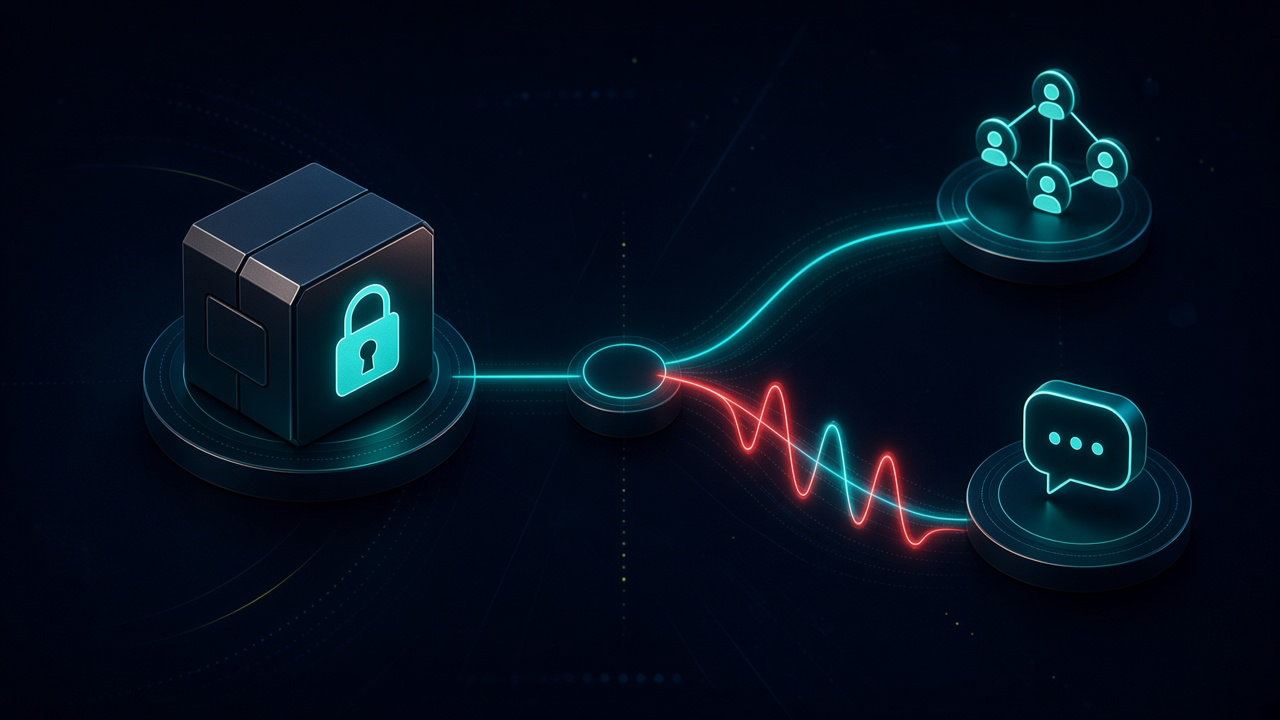
AiSensy vs an Owned n8n WhatsApp Workflow. Written by Adeem Adil Khatri at Zaps Studio.
TL;DR
- Fixed-price automations that pay for themselves in weeks, not quarters.
- Lead routing, quote follow-ups, and recovery flows with real ROI numbers.
- You own the system — no retainer lock-in to keep it running.
AiSensy is the better starting point for fast WhatsApp campaigns, templates, and shared-inbox work. An owned n8n WhatsApp workflow is the better fit when messages must trigger controlled, cross-system operations. They are not direct substitutes: AiSensy is a WhatsApp-focused business platform, while n8n is an automation engine that still needs an official WhatsApp connection.
What is the practical difference between AiSensy and owned n8n?
The simplest distinction is this:
AiSensy: Buy a WhatsApp-focused platform with onboarding, broadcasts, templates, inbox features, and campaign tooling.
Owned n8n: Own the workflow logic, credentials, data movement, and integrations, while arranging WhatsApp connectivity separately.
Hybrid setup: Use AiSensy or another official provider for messaging operations, then use n8n for routing, enrichment, CRM updates, ticket creation, and back-office actions.
AiSensy reduces implementation work. Its USD plans include a free tier, with published paid plans starting at $45 per month for Basic and $99 per month for Pro; WhatsApp messaging charges are separate.
n8n’s self-hosted Community Edition can be used without a licence fee and without a vendor execution cap, but infrastructure and technical administration remain the business’s responsibility. The n8n Business plan is listed at €667 per month when billed annually, so “owned” does not automatically mean “free” if team governance and paid features are required.
For an operations-heavy SMB, the decision usually depends less on the first monthly invoice and more on how much logic sits outside WhatsApp.
When is AiSensy the better choice?
Choose AiSensy when the immediate requirement is WhatsApp engagement rather than broad systems orchestration.
It suits teams that need:
WhatsApp Business API onboarding through a platform
Broadcasts and approved message templates
A shared team inbox
Campaign scheduling and segmentation
Basic chatbot or automation features
A faster launch with less engineering work
AiSensy is especially practical for ecommerce teams, agencies, and sales teams that already know the message journey they want. A business can start with a platform subscription, configure templates, connect agents, and manage campaigns without first designing a full workflow architecture.
The limitation is control. AiSensy is not a replacement for an owned operational data layer. Complex rules involving stock, credit status, delivery exceptions, multiple CRMs, internal approvals, or custom APIs may eventually require additional automation.
For a broader comparison of implementation budgets, see Zaps Studio’s workflow automation cost guide.
When does an owned n8n workflow make more sense?
Owned n8n is stronger when WhatsApp is one event source inside a larger process.
Examples include:
- A customer sends an order number.
- The workflow validates the customer against the CRM.
- n8n checks an ERP, warehouse system, or shipment database.
- The workflow creates or updates a support ticket.
- A delivery status is retrieved from an internal API.
- The result is logged against the customer record.
- An approved WhatsApp reply is sent through the connected provider.
- An exception is routed to a human team member.
This structure is useful when the business needs auditable logic, reusable integrations, and ownership of the workflow source. At Zaps Studio, clients own the n8n source, credentials, and documentation after delivery. Typical fixed-price packages are $1,000–$3,000 per workflow and $3,000–$12,000 per system, with delivery usually taking two to four weeks after an audit.
The limitation is operational responsibility. Self-hosted n8n means someone must manage the server, upgrades, backups, access controls, monitoring, incident response, and provider credentials. The free Community Edition removes a licence charge; it does not remove those duties.
See practical n8n workflow examples for B2B teams if the requirement extends beyond WhatsApp messaging.
How much does each option cost in 2026?
A realistic comparison should separate platform fees, WhatsApp charges, infrastructure, and delivery work.
AiSensy cost signals
Free tier: $0 subscription, subject to the plan’s capabilities and usage conditions.
Basic: About $45 per month on AiSensy’s published USD pricing.
Pro: About $99 per month on the published USD rate card.
Enterprise: Custom pricing.
WhatsApp usage: Charged separately according to applicable message categories and recipient-country rates.
AiSensy’s pricing page states that WhatsApp conversation credits are managed separately and that message pricing depends on the user’s country. Meta’s WhatsApp Business documentation also states that businesses pay for delivered messages, with rates determined by message category and recipient country.
Owned n8n cost signals
Community Edition: $0 n8n licence fee when self-hosted.
Small server: Often budgeted separately as a basic VPS, with production requirements potentially increasing the cost.
n8n Cloud: Paid plans are available when the business does not want to operate the server.
Business self-hosted plan: Listed by n8n at €667 per month when billed annually.
WhatsApp provider: Additional cost for the official WhatsApp API connection or BSP.
Engineering and operations: Required for setup, security, monitoring, maintenance, and changes.
For a small pilot, a business may spend roughly $0–$100 per month before message fees if it uses a low-cost platform or basic self-hosting. That is only a software starting point. A production workflow should also budget for implementation and ongoing ownership.
Zaps Studio’s current pricing page separates workflow delivery from the underlying software subscriptions and message charges.
Which option gives better ownership and flexibility?
Owned n8n usually wins on workflow ownership and flexibility.
A business can:
- Keep its workflow source under its control.
- Connect CRMs, ERPs, databases, ticketing tools, and internal APIs.
- Add approval gates and exception handling.
- Reuse data across several channels.
- Change routing logic without rebuilding the whole customer-facing platform.
- Move between WhatsApp providers more easily if the workflow is designed with a provider layer.
- AiSensy usually wins on operational simplicity.
A business can:
- Launch faster.
- Avoid managing an automation server.
- Give agents a WhatsApp-focused workspace.
- Use campaign functionality without building it from scratch.
- Keep early implementation effort lower.
The trade-off is clear: AiSensy gives you a product; n8n gives you infrastructure and control. The latter needs a deliberate operating model.
What are the main alternatives to AiSensy and n8n?
Wati: WhatsApp BSP, shared inbox, campaigns, and automation; suits teams wanting a managed WhatsApp workspace, but it is less suitable when the core requirement is deeply custom internal orchestration.
Respond.io: Omnichannel inbox and customer communication platform; suits teams handling multiple channels, but its broader inbox model may add cost and complexity for a WhatsApp-only operation.
HubSpot: CRM routing and sales automation; suits teams already standardised on HubSpot, but advanced automation and connected WhatsApp workflows can require additional products or configuration.
Make: Hosted visual automation platform; suits teams that want multi-app automation without server administration, but it provides less ownership of runtime infrastructure than self-hosted n8n.
For lead assignment rather than WhatsApp operations, Chili Piper is a recognised routing and scheduling option. Its limitation is scope: it is designed around revenue handoffs and meetings, not as a general replacement for a WhatsApp provider plus n8n.
For low-cost CRM automation, Zoho CRM can be sensible. Its limitation is that the business still has to work within Zoho’s data model and product ecosystem.
What does a good hybrid architecture look like?
A practical hybrid design separates customer messaging from business process logic:
- WhatsApp provider: Receives and sends messages through the official WhatsApp Business Platform.
- Webhook layer: Passes inbound events to n8n.
- n8n orchestration: Validates, enriches, routes, and transforms the data.
- Business systems: Updates the CRM, ERP, helpdesk, database, or shipment platform.
- Approval and exception layer: Sends sensitive cases to a human.
- Outbound message: Returns an approved status, update, or next step through the provider.
- Audit trail: Records the event, decision, response, and failure state.
This architecture avoids forcing AiSensy to behave like an ERP integration layer or forcing n8n to become a complete WhatsApp inbox product.
A workflow such as Shopify WhatsApp order tracking without extra headcount illustrates the type of process where customer communication and operational data need to work together.
What should a UK SMB choose?
Choose AiSensy when:
- The team needs campaigns or a shared inbox quickly.
- WhatsApp is the main channel.
- Internal systems are simple.
- A non-technical team will manage day-to-day messaging.
- The business prefers predictable platform administration.
Choose owned n8n when:
- WhatsApp must connect to several internal systems.
- The workflow includes approvals, exceptions, or complex routing.
- The business wants source-code and credential ownership.
- The team can support infrastructure or has an automation partner.
- The workflow will become part of core operations.
Choose a hybrid when both requirements matter. This is often the most sensible design for operations-heavy SMBs: use an official WhatsApp product for delivery and agent experience, then let n8n manage the logic that turns conversations into operational work.
That approach also leaves room for specialist systems such as Shipment Ledger when importer landed-cost processes need more than a chat tool.
What should be checked before committing?
Use this short assessment before selecting a platform:
- Count the systems that must be updated after an inbound WhatsApp message.
- Identify whether the workflow needs a database, ERP, ticketing system, or internal API.
- Separate WhatsApp message fees from subscription costs.
- Decide who owns credentials and workflow source code.
- Define who handles failed executions and provider outages.
- Confirm whether agents need a shared inbox or only automated replies.
- Estimate the number of message categories and recipient countries.
- Check whether the business requires audit logs, approval gates, or data retention controls.
- Price implementation separately from monthly software.
- Document the exit plan if the WhatsApp provider changes.
For teams still deciding whether automation is worth building, B2B workflow quick wins can help prioritise a contained first process.
What is the final verdict?
AiSensy is the faster, lower-operations choice for WhatsApp campaigns, templates, and team inboxes. An owned n8n workflow is the stronger long-term choice when WhatsApp must coordinate CRM, ERP, support, finance, logistics, or internal API actions.
They should not be evaluated as identical products. The most robust setup is often a hybrid: an official WhatsApp platform for compliant messaging and human conversations, with n8n owned by the business for routing, enrichment, system updates, and operational control.
Keep reading
Workflow automation cost guide
USD/GBP bands for DIY, freelancer, and fixed-price builds.
OpenFixed-price packages
One workflow from $1,000. You keep the n8n source.
Open10 n8n workflow examples
Lead routing, CRM revival, quote follow-up, ecommerce ops.
Open5 B2B automation quick wins
The live how-to that pairs with most of these drafts.
Open
FAQ
Ready to automate your workflows?
Book a free 30-minute audit. We'll analyze your current workflows and identify automation opportunities that pay for themselves in weeks.